

We’ve all been there: you download a simple PDF converter or a “free” game, and suddenly your Google Chrome looks different. Your homepage is now a random search engine you’ve never heard of, and every time you open a new tab, ads start popping up everywhere. I recently dealt with this on my work laptop after a “search hijacker” extension managed to bury itself deep in my browser’s configuration files. It’s a frustrating experience that makes you feel like you’ve lost control of your own computer.
When Chrome starts acting this way—or if it simply feels heavy and slow—most people think they need to uninstall and reinstall the whole browser. However, in my experience, that often doesn’t work because Chrome’s “User Profile” folder stays on your hard drive, keeping the glitches alive even after a fresh install. The “Reset” feature is actually a much more surgical tool. It targets the specific settings that hijackers love to change while leaving your most important data, like your vacation photos and work passwords, untouched.
During my testing of Chrome v124 and newer versions, I found that many users are afraid to hit the “Reset” button because they think they will lose their 10 years of bookmarks or their saved logins. I want to clear that up right now: a reset does not delete your bookmarks, your browsing history, or your saved passwords. It only targets the “volatile” settings—things like your default search engine, your pinned tabs, and the temporary cookies that sites use to track you.
In this guide, I’ll show you exactly how to perform a clean reset on both your desktop and your phone. I’ll also explain the “Why” behind the process, so you know exactly what to expect once the browser restarts. If your search bar has been hijacked or if Chrome is crashing every five minutes, these steps are the most effective way to reclaim your browser.
Method 1: Resetting Chrome on Windows or Mac
This is the full “factory reset” for the browser software.
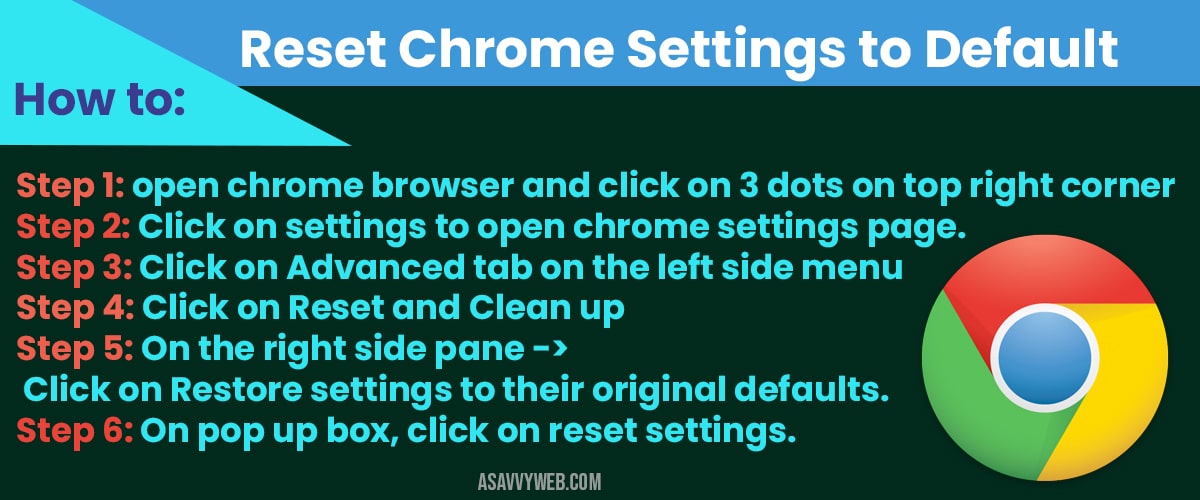
- Open Chrome and click the three dots (Menu) in the top right corner.
- Select Settings.
- On the left-hand sidebar, click Reset settings.
- Click Restore settings to their original defaults.
- A box will appear explaining what will happen. Click Reset settings.
What I noticed: Your screen might flicker for a second while Chrome rebuilds your preferences file. This is normal.
Method 2: The Mobile “Reset” (Android & iPhone)
Chrome on mobile doesn’t have a single “Reset” button like the desktop version. You have to clear the “App Data” instead.
- For Android: Go to phone Settings > Apps > Chrome > Storage. Tap Clear Cache and then Manage Space > Clear All Data.
- For iPhone: Open the Chrome app, tap the three dots > Settings > Privacy and Security > Clear Browsing Data. Select “All Time” and check all boxes.
Expert FAQ: What actually happens?
Q: Why were my extensions disabled?
A: Chrome disables extensions during a reset because many “search hijackers” are actually extensions. I recommend going through your list (chrome://extensions/) and only turning back on the ones you recognize.
Q: Will this fix my “Search managed by your organization” error?
A: Often, yes. This error is usually caused by a malicious policy file. A reset helps flush these unauthorized “rules” out of your browser.Q: Do I need to sign into Google again?
A: No. If you were signed in before the reset, Chrome usually keeps you signed in so your bookmarks can sync back down immediately.